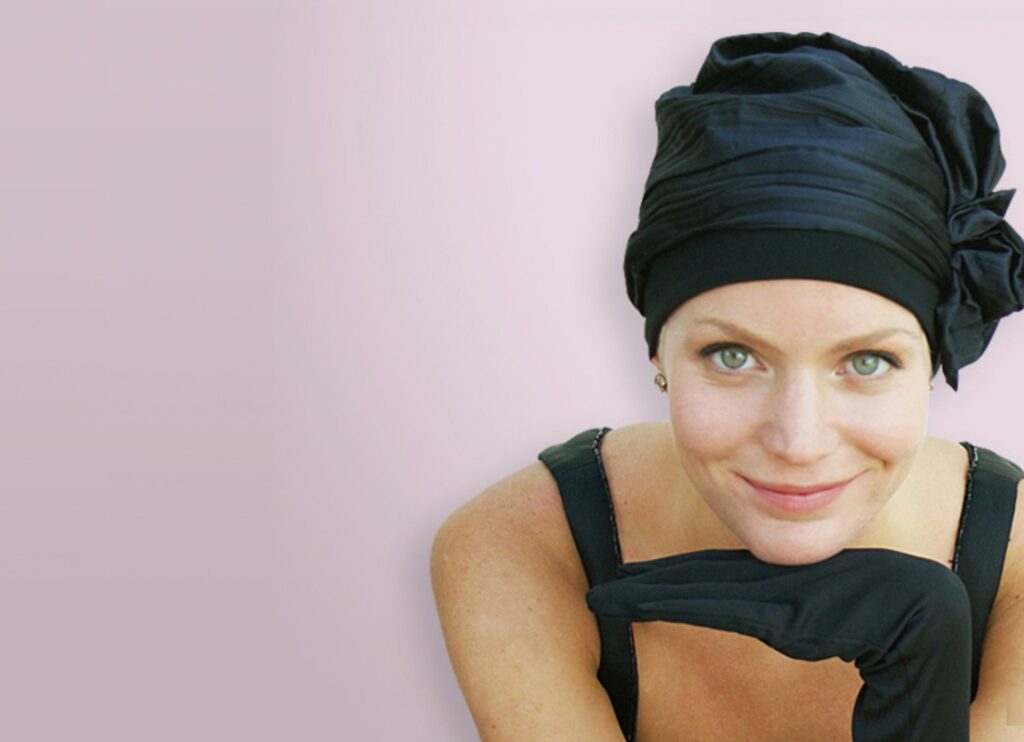

Chemo and Hair Loss – Our hair forms a unique part of our identity, it’s an expression of who we are, lifts how we’re feeling and helps us feel attractive. Suddenly losing it is upsetting, impacting not only our emotional state, but our self confidence can take a hit too.
Headwear can offer practical help with the ‘day to day’, take a look at our headscarves for cancer patients for stylish prints and selected scarf fabrics. Colour and tying styles can bring a personal touch to your wardrobe style during this time.
Hair loss is a visible sign of illness and its understandable to feel a degree of ‘loss of control’ in managing your recovery. People’s concern and questions can feel intrusive. So at the risk of sounding mad here I’d like to suggest a different outlook. A chance to kick back, take back a bit of control and look good to feel better.
At Suburban Turban, our headscarves offer a fantastic range of colours, fibres, textures and styles, suitable for whether you’re at home, out and about in town, or spending a day in the garden.
Chemotherapy and hair loss – the causes
It’s not a forgone conclusion that your chemotherapy will result in hair loss – different treatments affect different people in different ways. That said, if chemotherapy has caused your hair loss, it is because chemotherapy drugs can be indiscriminate in how they fight cancer, attacking not only cancer cells, but also other, perfectly normal cells in your body, such as your hair follicles.
Here is a visual guide through those first few weeks and months. (Please remember each individual is unique and hair regrowth times will vary for each of us.)

For the full article please click on the link – © Cancer Be Glammed – written by Anna Crollman
Is chemotherapy hair loss permanent?
In most cases, hair will begin to grow again in the months after your treatment has finished, although you may notice some differences at first. Your medical care team should be able to answer fully any concerns you might have. If your chemotherapy treatment plan includes Taxotere (Docetaxel), further research can be found here.
What can I do about my hair loss?
There is no treatment currently available that can completely guarantee the prevention of hair loss through cancer treatment, but there are steps that you can take to manage it. The Cold Cap – scalp cooling – is now widely available throughout the NHS UK. This useful link from Macmillan covers a thorough analysis of the benefits, and the side effects. Scalp cooling is only effective with certain chemotherapy drugs.
What does scalp cooling involve – to start your hair is sprayed with water and hair conditioner is combed through. (This ensures contact with the scalp and easy removal of the cap at the end of the session.)
There are different sized caps, but the fit must be tight. The blue cap contains the coolant, the grey corded / outer cap goes over the top. Rather like a jockey’s cap there is a strap that goes under your chin.
Once the cap is on, you are attached to the machine and it is turned on. The collant starts to circulate around the cap and it quickly feels cold. Scalp temperature is reduced to around -18/-22 degrees. This procedure is done in advance of starting the chemo treatment and it then stays on for a while after chemo finishes. (You can disconnect for toilet trips.)
Once the machine is turned off it takes about 15 minutes to enable your scalp/hair to defrost. Then slowly the cap is removed. Once again your medical team will be answer any questions and there is the possibility of trying it and moving away from it, if it’s not quite right for you.
Once / if chemo hair loss is established
There is an opportunity for ‘reinvention’, whether that means considering a human hair wig – whose shape, tone and colour could be something completely different to your own natural hair. Some retail therapy – some new key pieces for your wardrobe.
A free makeup session with Look Good Feel Better to figure out how to really accentuate your eyes and cheek bones that are suddenly much more visible. And of course try out some headwear options women’s turbans, chemo hats or headbands.
For more information about headwear – how to measure your head, what styles work well, a personal fitting, or simply get some advice over the phone, please contact us via the site email / phone number.